
BUDGET 2026-27: ECC expands bureaucrats’ stipends and okays Rs40bn grants. Khaleeq Kiani
Published June 6, 2026 Updated about 2 hours ago
Thank you for reading this post, don't forget to subscribe!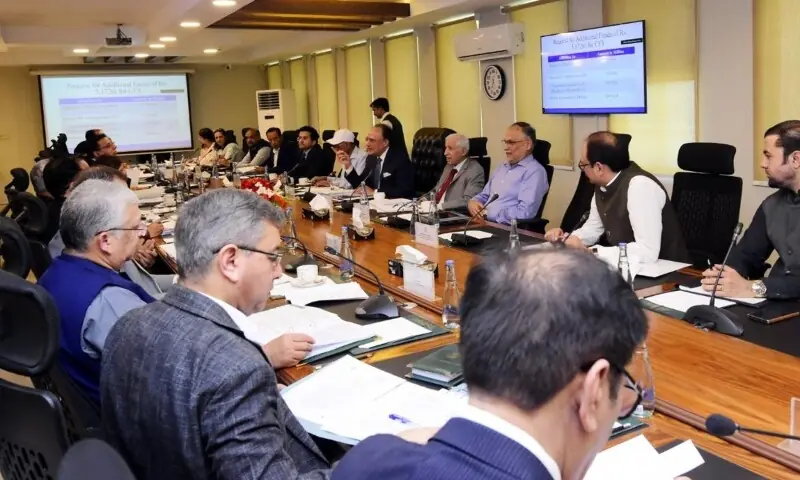
- Approves Rs100bn financing facility for PSO
- Oil company facing over Rs900bn receivables from SOEs
- Special honoraria expanded to more ministries, departments
- Rs10.15bn cleared for Pakistan Navy’s Hangor Project
- Rs4.38bn granted to Gilgit-Baltistan ahead of elections
ISLAMABAD: Less than a week before the next budget, the Economic Coordination Committee (ECC) of the cabinet on Friday approved more than Rs40 billion in supplementary grants and a Rs100 billion sovereign-guarantee-backed financing facility for the Pakistan State Oil (PSO), which is facing over Rs900 billion in receivables from other state-owned enterprises, raising concerns about smooth oil supplies.
And despite financial constraints forcing development cuts in the name of IMF restrictions, the ECC meeting, presided over by Finance Minister Muhammad Aurangzeb, also allowed Rs 10 bn in additional funds for parliamentarians’ development schemes and expanded the scope of special honoraria running up to six months’ additional salaries to more ministries and departments involved in federal budget preparations.
The benefit, already available to officials in around a dozen ministries and entities, including finance, revenue, planning, development, FBR, National Assembly, Senate, and the Prime Minister’s Office, was expanded to the Law and Justice Division, Commerce Division, and the Accountant General of Pakistan Revenue (AGPR). The fiscal impact was not disclosed.
Naqvi urges enhanced intelligence coordination among SCO member states
Earlier, Naqvi and his Iranian counterpart, Momeni, discussed de-escalation and security issues on the sidelines
Web Desk
June 05, 2026
5 min read
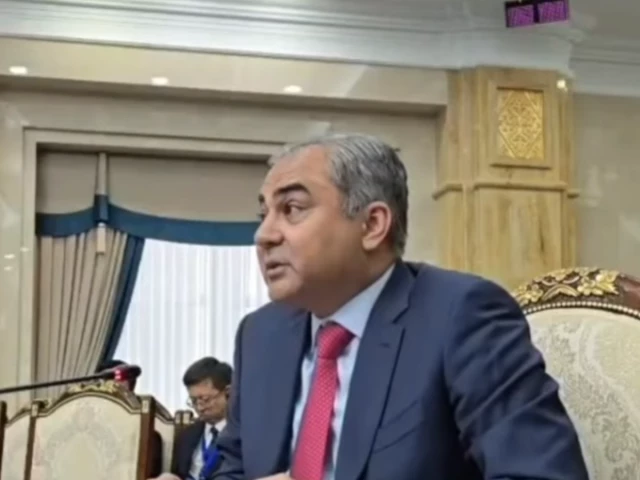
Interior Minister Mohsin Naqvi on Friday urged Shanghai Cooperation Organisation (SCO) member states to strengthen intelligence cooperation and joint efforts against online extremism under the organization’s Regional Anti-Terrorist Structure (RATS) framework.
The interior minister was attending a gathering of interior and public security ministers from SCO member states in Kyrgyzstan’s capital, Bishkek, which is being held from June 4 to June 6.
Addressing the special meeting, Naqvi said, “Our region faces serious security threats. Terrorism, organized crime, drug trafficking, cybercrime, and terrorist financing require a collective response.”
He said criminal networks are increasingly exploiting artificial intelligence and digital platforms, making it essential for institutions to modernize and strengthen cooperation to address evolving threats. The minister said Pakistan remains fully committed to the principles of the “Shanghai Spirit,” including mutual trust, equal partnership, and respect for sovereignty.
Pakistan rejects India’s objections to GB polls.
FO terms Indian remarks baseless and politically motivated
Our Correspondent
June 06, 2026
2 min read
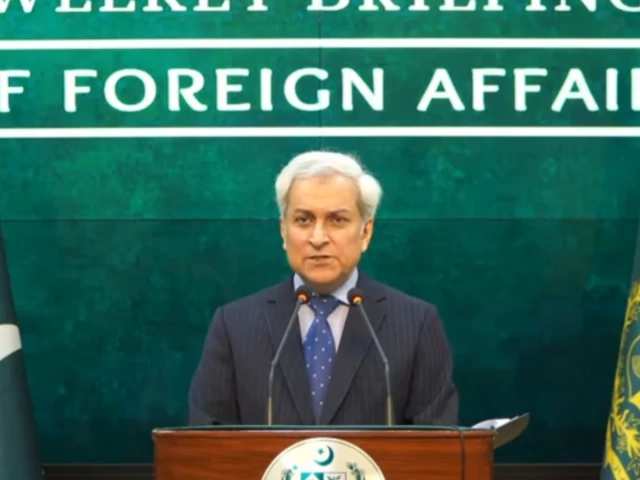
Pakistan on Friday “categorically rejected” India’s remarks regarding the upcoming elections in Gilgit-Baltistan (G-B), terming them “baseless” and part of a “carefully choreographed attempt to conflate fact with fiction.”
In a statement, Foreign Office (FO) spokesperson Tahir Andarabi said India remained in “illegal occupation of the internationally recognized disputed territory of Jammu and Kashmir” and accused New Delhi of being a “global leader in propagating fake narratives and tendentious propaganda.”
“We unequivocally reject this latest Indian rhetoric with the contempt it deserves,” the statement said.
The response came after India’s foreign ministry, in a statement issued earlier on Friday, objected to the upcoming elections in G-B and claimed that “the entire Union Territories of Jammu and Kashmir and Ladakh, including the so-called ‘Gilgit-Baltistan,’ are integral and inalienable parts of India.”
Reiterating Pakistan’s longstanding position, the FO said the Jammu and Kashmir dispute remained the longest unresolved issue on the United Nations Security Council agenda and originated from India’s forcible and unlawful occupation of the state in 1947.
It added that the only just and durable settlement of the dispute lay in the implementation of relevant UNSC resolutions, which guarantee the Kashmiri people their “inalienable right to self-determination through a free and impartial plebiscite under UN auspices.”
The FO further stated that India’s “unfounded assertions” regarding G-B could not divert attention from “grave and systematic human rights violations” in India-occupied Kashmir.
AJK outlaws JAAC following protest call
The center asked to send 14,000 additional law-enforcement personnel to maintain order
Our Correspondent
June 06, 2026
4 min read
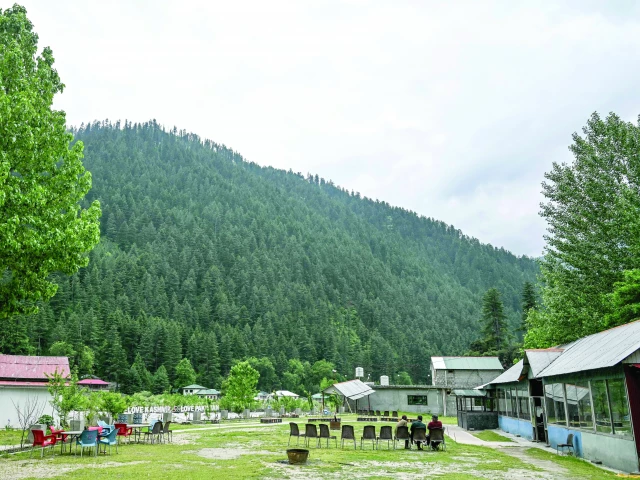
The Azad Jammu and Kashmir (AJK) government on Friday proscribed the Jammu Kashmir Joint Awami Action Committee (JK-JAAC) under anti-terrorism laws as the state administration moved to tighten security ahead of a planned protest call on June 9.
The AJK Home Department issued a formal notification placing the JK-JAAC under the First Schedule of the Azad Jammu and Kashmir Anti-Terrorism Act, 2014, effectively banning its operations along with all associated nomenclatures, following the presidential approval.
“The Government of AJ&K has reasonable grounds to believe that Jammu Kashmir Joint Awami Action Committee (JK-JAAC), also known by the names Joint Awami Action Committee (JAAC) and Awami Action Committee (AAC), is engaged in terrorism,” the notification stated.
It further alleged that the organization had acted “in a manner prejudicial to the peace and security of the State” and had been “involved in creating anarchy in the State by intimidating the public, promoting hatred, and creating a sense of insecurity in society and the public at large.”
Officials said the decision followed an assessment of material deemed sufficient to indicate activities harmful to law and order. Citing Section 12 of the Anti-Terrorism Act 2014, the notification confirmed the group’s formal inclusion in the First Schedule, with all alternative names covered under the ban.
The Home Department said legal action would follow in accordance with the law, while copies of the notification were circulated to all the relevant authorities in Islamabad and Muzaffarabad as well as the Poonch and Mirpur divisions of the state.
Authorities reiterated that maintaining public order remained a priority, stating that no organization would be allowed to “endanger public peace, security, or the administrative order of the state” as enforcement measures are implemented across the region.
Against this backdrop, the AJK government has also sought reinforcement of 14,000 additional law-enforcement personnel from federal and provincial agencies ahead of the June 9 protest call, while issuing a travel advisory for visitors.
In a letter addressed to the chief secretary and interior secretary, AJK Inspector General of Police Captain (retd.) Liaquat Malik said the JK-JAAC had announced protests and a long march, requiring manpower beyond existing district-level deployment.
The request includes 6,000 personnel from the Frontier Constabulary, 5,000 from Pakistan Rangers, 2,000 from Islamabad Police, and 1,000 from Sindh Police. The letter states that 60% of deployed personnel should be equipped with anti-riot gear, including tear gas guns and shells, while 40% would remain armed, with deployment sought for 15 days from June 7 to June 21.
Subsequently, more than 650 Islamabad police personnel were summoned to Police Lines Headquarters under emergency arrangements in an initial phase of deployment, with officials directing them to report in plain clothes.
The AJK government also advised tourists and outsiders to avoid traveling to the region and urged visitors already present to leave immediately ahead of the protest period. The advisory will remain in force from June 5 to June 20, with authorities stating it is intended “to save visitors from any unexpected situation or inconvenience.”
Meanwhile, political and administrative authorities in AJK have expressed reservations over the protest call, stating that most of the committee’s demands have already been addressed through institutional mechanisms.
Officials said 35 out of 38 demands raised by the committee had been accepted or implemented, while progress continued on remaining issues through established forums, including a Monitoring and Implementation Committee and an independent Committee of Experts constituted to deliberate on sensitive constitutional matters.
The government said it had pursued negotiations and relief measures, including compensation payments to affected families, subsidies on wheat, reduction in property taxes, open merit in education and recruitment, and adjustments in administrative structure and financial reforms.
It further stated that certain demands relating to taxation, revenue systems, refugee seats, and official privileges required constitutional and legal processes rather than street agitation, adding that these matters were already under structured consultation.
Authorities accused the committee of rigidity and warned that any attempt to disrupt the electoral process on June 9 would be treated as an attack on democratic norms, particularly as the date coincides with the start of nomination filings for the July 27 general elections.
Defense Minister Khawaja Asif also rejected the demand attributed to the action committee regarding the abolition of 12 seats reserved for Pakistan-based Kashmiris in the AJK Legislative Assembly, calling it an attempt to undermine the electoral process ahead of the polls. In a post on X, he said raising such a demand before elections amounted to sabotaging the democratic framework.
Observers and officials further argued that the committee’s continued boycott of institutional dialogue and implementation forums had intensified tensions, noting that its refusal to engage with designated committees had hindered resolution efforts.
They said the Monitoring and Implementation Committee had remained active in reviewing agreed terms, while an expert panel on refugee seats had been constituted for legal deliberation, but participation from the action committee had been inconsistent.
Authorities maintained that turning away from formal mechanisms while calling for a wheel-jam strike on the opening day of the nomination process risked obstructing candidates and disrupting administrative functions during a critical electoral phase.
With enforcement measures now being rolled out alongside heightened security arrangements, the AJK administration has reiterated that maintaining law and order, protecting public movement, and ensuring the continuation of electoral activity remain its central priorities in the days leading up to June 9.
Govt targets Rs50b via trader scheme
Retailers to pay fixed 1% tax on sales Scheme to cover shopkeepers owning single outlet Minister describes initi
Shahbaz Rana
June 06, 2026
3 min read
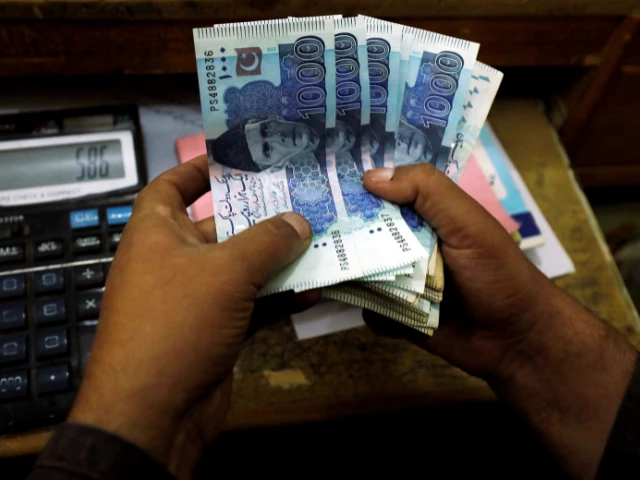
The government on Friday announced a “small trader scheme” under which retailers will pay a fixed 1% tax on sales in return for exemptions from tax audits and requirements related to digital transaction systems, with officials projecting annual revenue of Rs50 billion.
Finance Minister Muhammad Aurangzeb unveiled the scheme alongside Minister of State for Finance Bilal Azhar Kayani, who described the initiative as a “win-win solution” for the government and small-scale traders.
It is the second such initiative by the government aimed at bringing traders into the tax net after an earlier “Tajir Dost” scheme failed to deliver the desired results. Officials said the new program had been developed in consultation with the trader community.
https://tribune.com.pk/story/2611722/govt-targets-rs50b-via-trader-scheme: BUDGET 2026-27: ECC expands bureaucrats’ stipends and okays Rs40bn grants. Khaleeq Kiani